The old tenant handed back two keys and you have a stack of move-in paperwork to get through before the new lease starts Saturday. The locks still work. The question sitting in the back of your mind is whether you actually have to change them, or whether handing over the same keys the last tenant used is good enough. Do landlords have to change locks between tenants? In most states, no law forces you to. But that is the wrong place to stop thinking about it, because “not required” and “safe to skip” are two very different things, and the gap between them is where a preventable break-in and a negligence claim live.
This guide covers what the law actually requires (and the states and cities that do mandate it), the real difference between rekeying and replacing a lock, who pays, the liability you take on when you reuse an old lock, when to change locks beyond a routine turnover, and the simple key record that keeps you on the right side of all of it.
Pillar guide · 2026 edition · ~10 min readDo landlords have to change locks between tenants?
In most of the country, there is no statute that requires a landlord to change or rekey locks between tenants. The lease ends, the tenant leaves, and whether you touch the locks is left to your own judgment. That is the default almost everywhere.
But the default is not universal, and this is one of those topics where a handful of states and cities have written specific rules. A few places require landlords to rekey or change locks between tenancies, sometimes within a set number of days of a new tenant taking possession. Some require it only on request, or only in certain building types. And many more states have rules that are adjacent to this question, such as laws requiring you to rekey or change locks after a tenant reports domestic violence, stalking, or sexual assault, which you have to honor regardless of your general policy.
Because the rule can live in a state statute, a city ordinance, or even a local housing or building code, the only safe move is to check all three for your specific location before you assume you are free to reuse the old lock. The disclaimer that governs this whole guide: this is general education, not legal advice, and lock, security, and habitability requirements are set by state and local law and change over time. Confirm your own jurisdiction’s rules before you rely on any of this.
Here is the practical bottom line that holds no matter where you are. Whether or not a law requires it, changing or rekeying the locks at every turnover is cheap, fast, and the single best thing you can do to keep the number of working keys in the world down to the ones you handed your new tenant. The rest of this guide is about doing that well.
Rekey vs change the lock: which do you actually need?
People say “change the locks,” but at a normal turnover you usually do not need to replace anything. The two options are different in cost, speed, and when each one makes sense.
Rekeying means a locksmith (or you, with a rekey kit) takes the existing lock apart and recodes the cylinder so it opens with a brand-new key. The old keys stop working. The hardware stays on the door. It is quick, it is cheap, and for a routine move-out-to-move-in it is all you need.
Replacing the lock means removing the entire lockset or deadbolt and installing a new one. You do this when the hardware is worn out, damaged, broken, or when you want to standardize all your units on one brand or move to keyed-alike cylinders or a smart lock. It costs more and takes longer, and it is overkill for a lock that simply needs new keys.
The table below lays out the three realistic choices and when each one fits.
| Option | Rough cost | How long | When it fits |
|---|---|---|---|
| Rekey existing lock | $15 to $30 per cylinder (DIY kit) or $50 to $120 for a locksmith visit | Minutes per lock | Every normal turnover |
| Replace lockset / deadbolt | $40 to $150+ per door, plus labor | 15 to 30 min per door | Damaged, worn, or compromised hardware; standardizing |
| Smart lock with codes | $100 to $300+ per door | 20 to 40 min to install | You want code-based turnover with no physical keys |
A note on keyed-alike setups: it is tempting to have every unit in a building open with the same key so you only carry one. Do not do that across separate tenancies. One key that opens every unit means one lost or copied key compromises the whole building, and it undercuts each tenant’s security. Keep units on separate keys, and keep your master or management access, if you use one, tightly controlled.
Why it matters even when no law requires it
Here is the scenario that makes this worth ten minutes of a locksmith’s time. The tenant who just moved out was never the real risk. The risk is everyone they ever handed a key to over a two-year lease: a partner who later became an ex, a roommate who left early on bad terms, a dog walker, a house cleaner, a contractor, the friend who crashed for a month and got a copy cut. You have no way of knowing how many working keys to that unit exist. The departing tenant probably does not know either.
If you reuse the old lock and one of those keys is used to get into the unit after your new tenant moves in, you have a problem that is both a safety failure and a legal one. A tenant has a reasonable expectation that the landlord took basic steps to secure the unit they are paying for. When a landlord hands a new tenant a unit with locks that an unknown number of other people can still open, and someone gets in and the tenant is harmed or robbed, that landlord can be found negligent. The sentence “I didn’t change the locks because the old ones still worked” is not one you want to be explaining to a judge or an insurer.
This connects to the broader point that a landlord’s exposure often turns on whether they did the reasonable, ordinary thing and can show it. For how landlord liability for tenant injuries tends to play out, see when a landlord is liable for a tenant injury. Rekeying between tenants is about as clear an example of the ordinary, reasonable step as exists, and it is cheap enough that skipping it is hard to defend.

Who pays to change the locks?
For a routine turnover, the landlord pays. Rekeying or changing the locks between tenants is a normal cost of turning a unit, the same as cleaning, touch-up paint, and getting it rent-ready. You cannot bill it to the tenant who moved out as a deposit deduction, and you cannot charge the incoming tenant a separate fee for giving them a secure unit, because basic security is part of what the rent buys.
The exception is when the lock change is caused by the tenant’s own conduct. A few examples where the cost can fairly land on the tenant:
- The tenant lost their keys and asks you to rekey or replace a lock. That is a tenant-caused service, and a reasonable rekey charge is fair, ideally spelled out in your lease.
- The tenant changed the locks themselves without permission and did not give you a working key, and you have to rekey to regain lawful access or restore the original hardware. For how to handle that specific mess, see when a tenant changes the locks without permission.
- The tenant damaged the lock or door beyond normal wear, so you are repairing damage, not doing routine turnover. That can be a deposit deduction if you document it.
The throughline: if the lock change is part of normal turnover, it is your cost. If it is driven by the tenant’s loss, damage, or unauthorized change, it can be theirs, as long as your lease supports it and you keep the paperwork.
When to change locks beyond a normal turnover
Turnover is the obvious trigger, but it is not the only time you should rekey. A few situations call for changing the locks even in the middle of a tenancy, and some of them are legally required.
- A tenant reports domestic violence, stalking, or sexual assault. Many states require a landlord to change or rekey the locks promptly on a qualifying request, and sometimes to exclude a named abuser even if that person is on the lease. These laws are specific and time-sensitive. Treat such a request as urgent and check your state’s exact requirement.
- A key is lost or stolen. If a tenant reports lost keys, rekeying is the only way to be sure the lost key is useless. Waiting invites exactly the break-in you are trying to prevent.
- After a break-in or attempted break-in. If the unit’s security has been breached, rekeying or replacing the compromised hardware is part of restoring it.
- After broad contractor or vendor access. If you handed a key to a contractor for a big job and copies were floating around the site, rekeying afterward closes that loop.
- A roommate moves out and tensions are high. When one occupant leaves a shared unit on bad terms, the remaining tenant may reasonably want the locks changed. Coordinate it, since the departing person may still be on the lease.
In every one of these, the instinct is the same as at turnover: reduce the number of working keys to a known, controlled set, and write down what you did.
The turnover lock sequence, step by step
Fitting the lock change into your turnover is simple if you put it in the right order. The one rule that matters: the locks get changed before the new tenant takes possession, not after.
- Collect all keys from the outgoing tenant at move-out, and note how many you got back against how many you issued. A shortfall is a signal, not a crisis, because you are about to rekey anyway, but it is worth recording.
- Rekey or change the locks on every exterior door, including any that the tenant rarely used, such as a back or basement door. A secondary door with an old lock is still an open door.
- Cut or program the exact number of keys the new tenant is entitled to under the lease, and no spare “floaters” left lying around the office.
- Test every lock and key before handover. A new key that sticks or a deadbolt that does not throw is a maintenance call waiting to happen on day one.
- Hand over the keys at move-in and record it, capturing how many keys of each type you gave, to which tenant, and the date. This is the record that answers “how many copies exist” later.
This sequence slots directly into the rest of your make-ready work. For the full turnaround between tenants, see the rental turnover playbook.
Documenting the keys you issue
Changing the lock solves half the problem. The other half is knowing, and being able to prove, how many working keys exist and who has them. That is key control, and it is the part most landlords skip, which is exactly why “how many copies are out there?” is so often unanswerable when it matters.
A good key record at move-in captures a few specific things:
- How many keys of each type you issued (unit door, mailbox, gate, laundry, amenity fob), and to which named tenant.
- The date the keys were handed over.
- A note that the locks were rekeyed or changed before possession, and when.
- The tenant’s acknowledgment that they received that number of keys and will not make unauthorized copies or change the locks without permission.
Kept this way, the record does two jobs at once. It sets the baseline for the key count you expect back at move-out, and it is your evidence that you took the reasonable security step of rekeying before the tenant moved in. Buried in a text thread or remembered from “I think I gave them two,” it does neither.
This is where a structured move-in flow beats a loose checklist. DiscoveryMark’s Move-In Record flow captures the condition walkthrough, the photos, the key handover, and the tenant’s signature into one finalized, timestamped PDF, so the number of keys issued, the date, and the tenant’s acknowledgment all live in the same court-ready record as the rest of the move-in. The tenant completes their part from a passwordless link, with no account and no app. Here is what that move-in flow looks like.
For everything else that belongs in that move-in file, see the complete guide to move-in records, and for why dated photos anchor the whole thing, move-in and move-out photos.
Smart locks and keypad entry
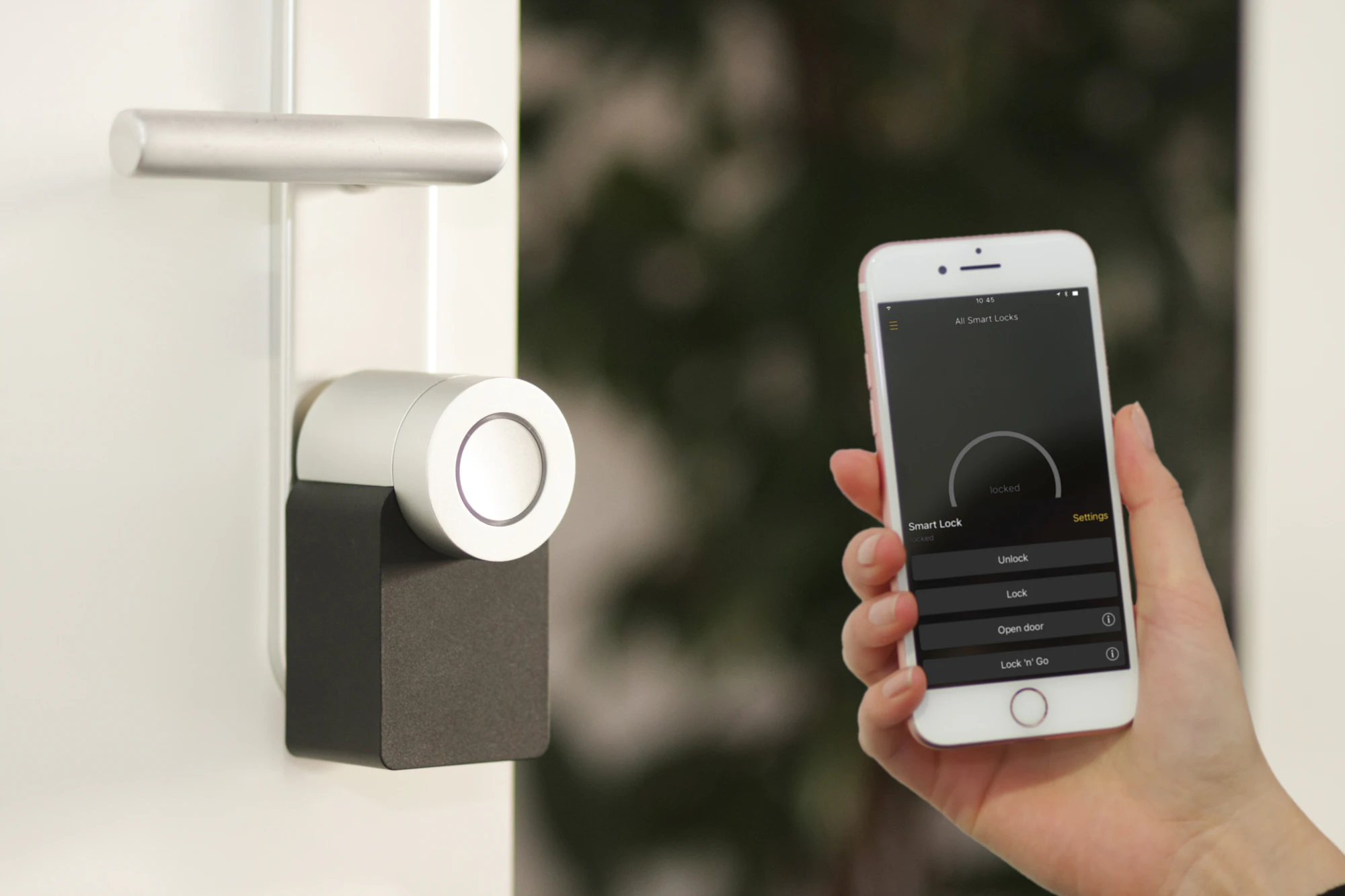
Smart locks and keypad deadbolts change the turnover math. Instead of rekeying a cylinder, you delete the old codes and set a new one for the incoming tenant, which takes a minute and costs nothing per turnover after the hardware is installed. Some landlords find that alone justifies the upgrade on units that turn over often.
A few things to keep in mind before you switch everything over:
- Reset codes fully at turnover. Deleting the departing tenant’s code is the equivalent of rekeying. Do not just add the new tenant’s code on top of the old ones.
- Keep a physical backup. Most keypad locks still have a key cylinder or a battery-failure workaround. Do not lose track of it, and rekey it if the unit changes hands, because it is still a working key.
- Mind privacy and access logs. A lock that records entries can be useful, but be careful about monitoring a tenant’s comings and goings, which can raise privacy and quiet-enjoyment concerns. The lock is for securing the unit, not surveilling the resident.
- Have a power-failure plan. Dead batteries should not mean a tenant is locked out. Make sure there is a reliable fallback and the tenant knows what it is.
Whether you rekey a traditional lock or reset a smart lock, the principle does not change: at every turnover, make sure the only credentials that open the door are the ones you issued to the current tenant, and write down what you issued.
Frequently asked questions
Do landlords legally have to change the locks between tenants? In most states, no. There is usually no statute requiring it. A handful of states and cities do require rekeying or lock changes between tenancies, sometimes within a set number of days, and many states require a lock change after a tenant reports domestic violence. Check your state and local rules, and change the locks anyway, because it is cheap protection against liability.
Is rekeying the same as changing the locks? Not exactly. Rekeying recodes the existing lock to a new key so old keys stop working, while changing the lock replaces the whole hardware. For a normal turnover, rekeying is enough and is cheaper and faster. Replace the lock only when the hardware is damaged, worn, or you are upgrading.
How much does it cost to rekey a lock between tenants? A DIY rekey kit for common lock brands runs roughly $15 to $30 per lock, and a locksmith visit is commonly $50 to $120 depending on the number of locks and your area. Replacing a full lockset costs more. In almost every case it is a small cost relative to the risk of skipping it.
Can I charge the tenant for changing the locks? Not for a routine turnover, which is your cost as the landlord. You can charge the tenant when the lock change is caused by them, such as lost keys, a lock they changed without permission, or damage they caused, as long as your lease supports it and you document it.
What if the old tenant didn’t return all the keys? Rekey or change the lock, which makes the missing keys useless. This is a core reason to rekey at every turnover: you often cannot be sure every copy came back, and a rekey resolves the uncertainty in one step.
Do I have to change the locks if a tenant reports domestic violence? In many states, yes, promptly and on a qualifying request, and sometimes you must exclude a named person even if they are on the lease. These laws are specific and time-sensitive, so confirm your state’s exact requirement and treat the request as urgent.
Authoritative sources
Whether lock changes between tenants are required, the timing, who bears the cost, and the special rules for domestic-violence situations are all set by state and local law and can change. Start with primary sources:
- Your state’s residential landlord-tenant act, for any lock, security, or habitability requirements and for domestic-violence lock-change provisions.
- Your city or county housing code and any local rental ordinances, which sometimes add rekeying requirements the state statute does not.
- Your local court’s self-help or landlord-tenant pages for forms and notice rules. Our state guides cite the controlling sections for several states.
- A licensed landlord-tenant attorney in your jurisdiction for anything that could reach a courtroom.
Changing the locks between tenants is rarely something the law forces you to do, and almost always something you should do anyway. Rekey every unit before the new tenant takes possession, replace hardware only when it is actually damaged or you are upgrading, charge the tenant only when their own conduct caused the change, and write down how many keys you issued and to whom. Do that, and the only people who can open the door are the ones who are supposed to. For the principles behind records that hold up, see property documentation, the complete guide.