
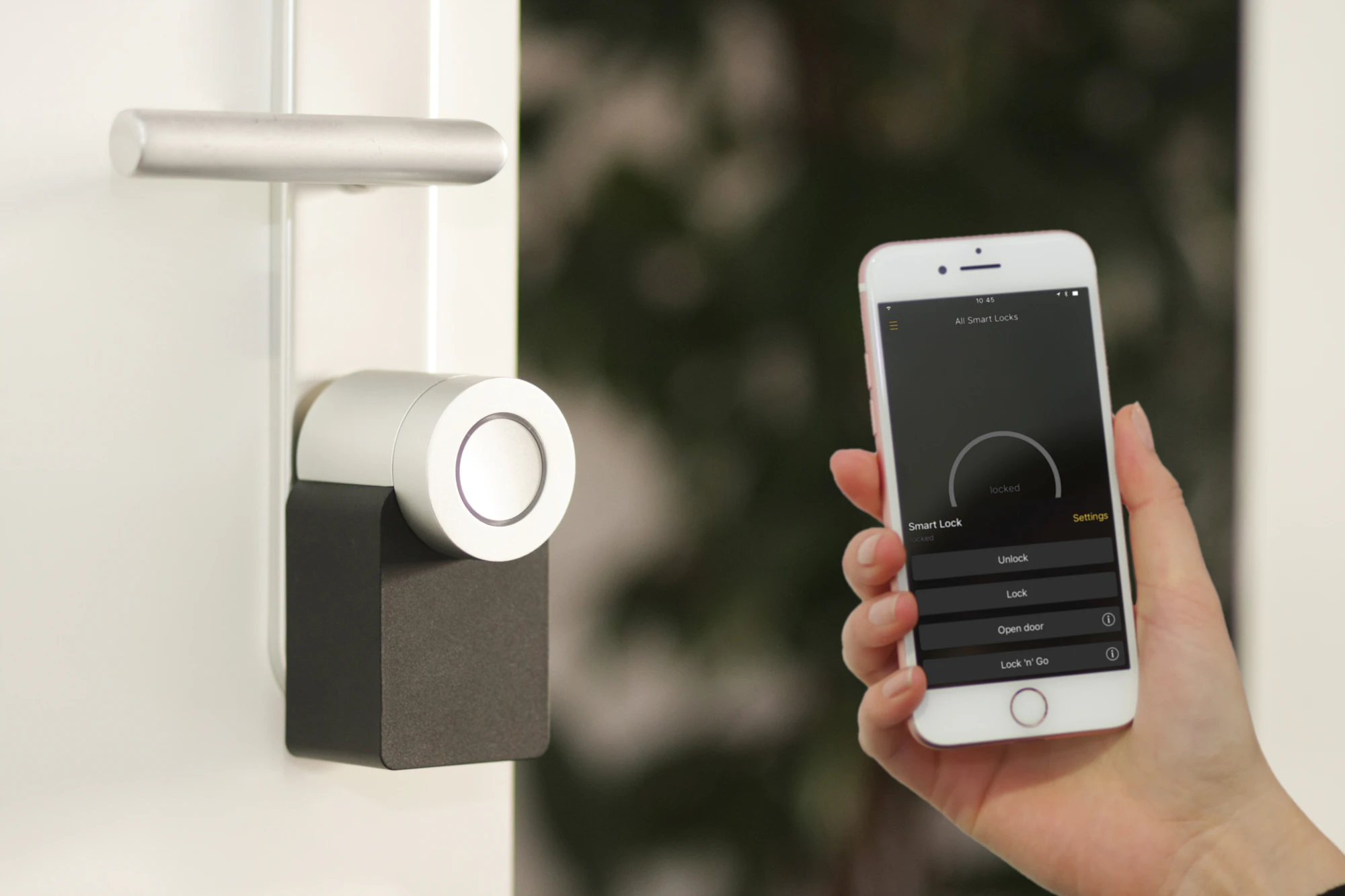
A companion to What to Include in a Lease Agreement, Tenant Made Unauthorized Alterations?, and the Landlord Notice to Enter guide. Cameras sit where privacy, property, and the lease all meet, which is exactly why they go wrong.
A tenant mounts a video doorbell on your front door and runs a wire into the siding. Or you, the landlord, put a camera in the shared hallway of a four-unit building after a package theft, and a tenant complains they are being spied on. Either way you are now in the middle of a security camera question in a rental, and the rules are narrower and more specific than either side usually assumes.
Security cameras in a rental run on two opposite legal lines. A landlord can generally watch the outside of a property but not the inside of a leased unit. A tenant can generally protect their own unit but cannot damage the building to do it or record the people around them. Get either line wrong and a reasonable security measure turns into a privacy lawsuit, a wiretap claim, or in the worst cases a criminal charge. This guide walks both sides, the audio trap that catches everyone, the lease language that prevents the fight, and how to document a camera dispute so it holds up.
This is general information, not legal advice for your state. Camera, privacy, and recording laws vary a lot by state and even by city, so confirm your local rules or have a local attorney review your lease before you rely on any of this.
Can a landlord put security cameras in a rental?
Short answer: outside and in shared common areas, usually yes. Inside a tenant’s unit, no.
The whole thing turns on a single legal idea, the reasonable expectation of privacy. Once a tenant signs a lease and takes possession, the interior of that unit is their private home for the term of the tenancy. You own the building, but you do not have the right to watch the inside of a home someone is renting from you. A camera that surveils the interior of a leased unit, or that is aimed through a window into one, is an invasion of privacy in nearly every state, and your ownership of the walls does not change that.
Outside the unit is different. On the exterior of the building and in shared common areas, no one has the same expectation of privacy, so a landlord generally may install visible security cameras. That typically covers:
- The building exterior, entrances, and exit doors.
- Driveways, parking lots, and carports.
- Shared yards, walkways, and mailbox areas.
- Common hallways, stairwells, lobbies, and laundry rooms in a multi-unit building.
Two conditions make those cameras defensible. First, the camera should be visible, not hidden. A camera a tenant can see is a security measure; a camera they cannot see starts to look like surveillance, which is the fight you do not want. Second, in many places you should disclose that the common areas are monitored, both in the lease and with a posted sign. Some states and cities require notice outright. Even where they do not, disclosure is what separates “the building has security cameras” from “my landlord is watching me.”
Where it gets gray
A few spots sit on the line. A camera at a unit’s front door is fine pointed at the hallway, but if it captures the inside of the unit every time the door opens, that is a problem. A doorbell camera in a shared interior hallway of a condo or co-op can run into association rules and the neighbors’ privacy. And a shared bathroom or locker-style space in a rooming house is still a private area even though it is shared. When a location is ambiguous, the safe move is to point the camera away from any space where a person undresses, sleeps, or reasonably expects to be unseen.
The audio recording trap
Here is the mistake that turns a legal camera into a lawsuit: leaving the microphone on.
Video and audio are governed by different laws. Most modern cameras record sound by default, and audio recording of conversations is where federal and state wiretap laws come in. Federal law and most states follow a one-party consent rule, meaning at least one person in the conversation has to consent. But roughly a dozen states require all-party consent, where every person being recorded has to agree. California, Florida, Washington, Illinois, Pennsylvania, Massachusetts, and Maryland are among them, and the exact list and its wording change, so treat this as a prompt to check your state, not a final answer.
In an all-party-consent state, a common-area camera that records tenants’ conversations without their consent can be an illegal wiretap even though the video is perfectly lawful. That exposure runs both directions: a landlord recording tenants and a tenant recording neighbors can both land on the wrong side of it.
The practical rule is simple. Run video only unless you are certain your state allows the audio you are capturing. Most security cameras let you disable the microphone in the app. Do it. The video is what protects the property anyway, and the audio is almost all of the legal risk for almost none of the benefit.
Can a tenant install their own security camera?
Usually yes, and in most places you cannot flatly forbid it. A tenant has a strong interest in the security of their own home, and courts and statutes tend to protect a renter’s right to take reasonable steps to protect themselves, their family, and their belongings. A video doorbell, an interior camera the tenant controls, a camera watching their own patio, these are generally the tenant’s call, not the landlord’s.
What a landlord can regulate is everything about the installation that touches the property or the neighbors. That is not a camera rule, it is the ordinary alterations and quiet-enjoyment framework applied to a camera:
- No damage or permanent alterations without consent. Drilling into brick, siding, or trim, cutting into the structure, or hardwiring into your electrical system are alterations a standard lease already restricts. A peel-and-stick or existing-wiring doorbell camera is a different story from four lag bolts into the stucco.
- No aiming into someone else’s private space. A tenant’s camera that stares into the neighbor’s living room window or films the unit next door’s entry can violate the neighbor’s right to quiet enjoyment and, with audio, state wiretap law.
- Shared-area and association limits. In a condo, co-op, or HOA building, the rules may restrict cameras in shared hallways or on the building exterior. Those rules bind the tenant through you.
- Restoration at move-out. Whatever the tenant mounts, they take down, and they return the surface to its move-in condition, same as any other fixture they added.
So the lease answer is not “no cameras.” It is “yes to protecting your own unit, with written approval for anything that penetrates a surface or changes the wiring, nothing aimed at the neighbors, and you put it back when you leave.”

When a tenant’s camera becomes a lease problem
Most tenant cameras are a non-issue. The ones that become a problem fall into a short list, and they are handled like any other lease violation: document first, cite the clause, give a chance to cure.
- It damaged the building. The tenant drilled a grid of anchors into the siding or ran a wire through a hole they cut. That is an unauthorized alteration you can require them to remove and restore, and potentially a deposit deduction at move-out for the repair.
- It targets a neighbor. Another tenant complains that a camera is pointed into their windows or records their door and conversations. Now you have a quiet-enjoyment and possibly a wiretap issue between two parties, and you are the one who has to resolve it.
- It records audio where it should not. In an all-party-consent state, a tenant’s camera capturing neighbors’ conversations in a shared hallway can be unlawful, which becomes your problem when the recorded neighbor complains.
- It violates association or local rules. The HOA fines the unit, or a local ordinance restricts exterior cameras, and the fine lands on you as the owner.
In each case the response is the same ladder. Get dated photos of the camera, the mounting, and what it captures. Send a written notice to cure that names the specific lease clause (alterations, quiet enjoyment, or compliance with rules) and states exactly what fixing it looks like: reposition the camera, disable the audio, remove it and patch the holes, by a reasonable deadline. If they cure, close it out with a photo of the corrected condition. If they refuse, the uncured violation becomes part of the record that supports further action.
This is a documentation problem before it is a legal one
Every camera dispute, landlord side or tenant side, comes down to proof. A tenant claims your common-area camera is aimed into their unit; you need to show where it actually points and that you disclosed it. You claim a tenant drilled four holes in the siding to mount a doorbell; you need the move-in record proving the siding was intact and dated photos of the damage. The side with the dated, specific record wins, and the side relying on memory loses.
That is the part most landlords handle badly. The disclosure is a line buried in a lease nobody signed a specific acknowledgment on, the photos of the tenant’s install are scattered on a phone, and the notice to cure is somewhere in an email thread. When it matters, you are reassembling the story under a deadline instead of pulling one file.
This is exactly the kind of record DiscoveryMark is built to produce. When a tenant's camera crosses from their own security into a lease problem, the lease violation flow captures the incident, the specific clause you are citing, dated photos of the install and the damage, the notice to cure, and how it was delivered, onto one finalized, signed PDF. And the [move-in record](/resources/move-in-move-out/move-in-records-complete-guide/) that proves the original condition of the siding or the wiring lives alongside it, so the before and the after are in one place instead of two.
Here is what the landlord’s lease violation record looks like as the incident builds, with the running timeline that keeps every step dated and in order.
What to put in the lease about cameras
The cleanest version of all of this is handled before anyone mounts anything, in the lease. A short camera provision prevents almost every fight:
- Disclose your cameras. List the common areas you monitor and state that the exterior and shared spaces may be recorded. Have the tenant acknowledge it.
- State that no landlord cameras exist inside the unit. This reassures good tenants and removes a line of argument later.
- Set the tenant-installation rule. Tenants may install cameras to secure their own unit, with written approval required for anything that drills into or penetrates a surface or ties into the building’s wiring.
- Prohibit audio where your state requires it, and aiming at others. No recording of neighbors’ private spaces, and no audio recording that violates state consent law.
- Require restoration at move-out. Any tenant-installed device comes down and the surface goes back to move-in condition.
| Camera question | Landlord | Tenant |
|---|---|---|
| Inside a leased unit | Never | Their own unit, yes |
| Exterior and common areas | Yes, visible + disclosed | Only within lease/HOA rules |
| Drilling or wiring to mount it | Owns the building, can | Needs written consent |
| Aiming at a neighbor's space | No | No |
| Recording audio | Follow state consent law | Follow state consent law |
| Hidden cameras in private space | Never (often criminal) | Never (often criminal) |
| Remove / restore at move-out | N/A | Required |
Hidden cameras: the line that creates real liability
Everything above assumes visible cameras. Hidden cameras are their own category, and they are where a camera stops being a civil dispute and starts being a crime.
A concealed camera in a bathroom, bedroom, or any space where a person undresses is video voyeurism in many states, with criminal exposure, not just a lawsuit. A hidden camera a landlord places inside a leased unit, even in a “common” item like a smoke detector or a clock, is both an invasion of privacy and, depending on the state and the location, potentially criminal. There is no landlord security interest that justifies it. If you need to monitor a property for a real reason, you do it with visible cameras in non-private areas and you disclose them.
Short-term rentals deserve a specific note here, because the rules are stricter and the platforms enforce them. Major booking platforms now prohibit indoor cameras entirely, and any exterior cameras or outdoor devices generally must be disclosed in the listing. If you run a furnished or short-term unit, assume no cameras indoors and full disclosure of anything outside.
Frequently asked questions
Can a landlord put a camera inside my apartment? No. Once you lease a unit, the interior is your private home for the term, and a camera that watches the inside of it, or is aimed through its windows, is an invasion of privacy in nearly every state. A hidden camera in a private area like a bathroom or bedroom can be a criminal offense, not just grounds for a lawsuit. Landlord cameras belong on the exterior and in shared common areas only.
Can a landlord put a camera in the hallway of a multi-unit building? Generally yes. Common hallways, stairwells, lobbies, laundry rooms, and parking areas do not carry the same expectation of privacy, so a landlord can usually install a visible camera there. The best practice, and in some places the legal requirement, is to disclose it in the lease and post a sign. The camera should not be aimed so that it captures the inside of any unit when a door opens.
Can a tenant install a Ring doorbell without permission? It depends on how it mounts. A tenant generally has the right to a camera that protects their own unit, but a standard lease restricts alterations, so anything that drills into the siding or ties into your wiring usually needs written approval. A device that uses existing doorbell wiring or a peel-and-stick mount is far less likely to be a problem than one that puts anchors into the structure. Spell out the rule in the lease so it is not a guess.
Can my landlord record audio from a security camera? Only within your state’s recording law, which is stricter than the video rule. Most states allow recording a conversation with one party’s consent, but about a dozen require every party to consent. In those all-party-consent states, a camera that records tenants’ conversations without consent can be an illegal wiretap even if the video is legal. The safe practice for everyone is to disable the microphone and run video only.
Can a landlord use security camera footage against a tenant? Footage from a lawfully placed, disclosed camera in a common area can generally be used, for example to document a lease violation, property damage, or who caused an incident. Footage from an unlawful camera, one inside a unit, hidden in a private space, or recording audio in violation of state law, can be thrown out and can expose the landlord to their own liability. Lawful, visible, disclosed cameras are the only ones worth relying on.
The bottom line
Security cameras in a rental are not complicated once you hold the two lines in your head. A landlord watches the outside, never the inside, keeps the cameras visible, discloses them, and leaves the microphone off unless the state clearly allows it. A tenant can protect their own unit, including a doorbell camera, but cannot damage the building to mount one, cannot aim it at the neighbors, and puts it back at move-out.
Handle it in the lease up front and most of this never becomes a dispute. When a camera does turn into a lease problem, document it the moment you find it, cite the clause, and give a real chance to cure, exactly as you would any other violation. The camera that holds up, in court or in a deposit fight, is the one with a dated record behind it. This is general information, not legal advice for your state, so confirm your local privacy, recording, and landlord-tenant rules, or have a local attorney review your lease, before you rely on it.


